5 Business Technology Trends Leaders Can’t Ignore in 2026

Key Takeaways

  • In 2026, the focus moves from pilots, experimentation and potential to tangible outcomes. Progress will come from recognizing opportunities amid the noise and using AI with clear goals.
  • Agentic AI is moving from chatbots to autonomous workflows, robotics-as-a-service is going mainstream, and small language models are replacing one-size-fits-all AI with focused, cost-efficient alternatives.
  • FinOps practices are becoming essential to manage cloud costs and usage, and cybersecurity is shifting toward proactive, AI-driven threat detection.

For years, business technology trends, with AI at the forefront, have promised sweeping digital transformation and outsized ROI. However, while the technology advanced rapidly, many organizations stayed stuck in experimentation mode, running pilots that rarely translated into results.

So, is the time for execution finally here?

From my perspective as a managing partner at an IT services company, the answer is yes. As Deloitte recently observed, “The focus has moved from endless pilots to real business value … because the pace of change itself has accelerated.”

The latest 2026 tech predictions once again place AI at the center of this shift. The difference is that the conversation changed from technology’s potential to tangible outcomes. For you, as a leader, progress will come from recognizing opportunities amid the noise and using AI with clear goals — to make teams more productive, costs more manageable and decisions faster and better informed.

Agentic AI: From chatbots to autonomous workflows

If the AI buzz of 2025 was about chatbots, 2026 is about autonomous agents. Agentic AI is moving beyond tools that assist people and toward systems that can run entire workflows end-to-end.

Enterprises are already seeing tangible results. At Walmart, AI agents help handle payroll and paid time off, support merchandising teams and make it easier for customers to find the right products for any occasion. Another example is AstraZeneca, where agentic AI acts as a research assistant, automating repetitive tasks, making sense of massive datasets and helping scientists move faster from insight to discovery.

Agentic AI is among the technology trends for smaller businesses, too — initially used to automate tasks like scheduling or basic customer support. In 2026, I expect many of these early experiments to move into production as companies redesign entire processes around AI agents in business, rather than just automating fragmented steps.

This leads to more consistent execution, less dependence and clearer visibility into what’s happening across the business. The payoff is the ability to grow with more control and fewer surprises, without adding layers of management or headcount.

Physical AI: Robotics-as-a-service goes mainstream

This year, AI is moving into the physical world, including robots, smart machines, sensors and connected devices.

For small and mid-sized businesses, access is the crucial change. As costs fall and capabilities improve, robotics and IoT are increasingly available as services, making it possible to automate physical work without owning or maintaining complex equipment. I’ve seen this in Accedia’s recent retail IoT project, where a cloud-connected vending platform reduced on-site service visits by over 30% while creating new advertising revenue.

At the enterprise end, a prominent example is Amazon. After deploying its millionth warehouse robot and improving efficiency by 10%, the company is now offering parts of its AI and robotics technology to others. As this “robots for hire” model matures, it could dramatically reduce labor-intensive bottlenecks across industries like manufacturing, retail and construction.

Small language models: The shift from big AI to smart AI

Large language models may have dominated headlines until now, but the AI trend for 2026 is small language models (SLMs). Designed to be smaller, faster and more focused, these models are better suited to specific business tasks rather than broad, general-purpose use. Gartner predicts that by 2027, context-specific models like these will be used at least three times more often than large language models, because organizations move away from a one-size-fits-all approach and adopt AI tailored to their industries.

SLMs have received far less attention and fanfare, but they offer a compelling alternative for organizations of all sizes. Because they are trained on narrower datasets and optimized for specific tasks, they require less computing power to run and maintain. This directly lowers infrastructure and cloud costs, reduces energy consumption and gives companies better control over data.

Cloud computing in the AI era: FinOps is a must

Cloud computing is entering a new phase shaped by AI-heavy workloads. As companies move AI models into production, cloud usage becomes more bursty and compute-intensive, and spending can rise faster than expected. What once felt manageable can quickly turn into a financial blind spot.

FinOps changes that dynamic. Applied to AI, it means treating cloud usage as a business investment: clear ownership of AI workloads, close tracking of usage and guardrails that scale with demand. IDC points out that when cost discipline is paired with agentic AI that drives productivity, businesses are far more likely to realize measurable value, without cloud costs quietly eroding margins.

Rethinking cybersecurity: When threats move faster than teams

Along with other 2026 tech trends, one theme keeps surfacing: security. Cyber threats are getting faster and more automated, and attackers are increasingly using AI to scale fraud. The impact is already widespread — 81% of small businesses experienced a security or data breach in the past year, with AI-powered attacks involved in more than 40% of cases.

That’s why the focus is shifting from “respond quickly” to “spot trouble early.” You’re expected to use AI defensively — to detect unusual behavior, flag risks in real time and stop incidents before they escalate into downtime or data loss.

There’s also a newer risk to manage: the AI systems you’re deploying. Increased reliance on AI means the models themselves must be protected — guarding against data leaks, misuse and unauthorized access.

This raises the bar for security. Stronger, more forward-looking protection isn’t optional, but it helps prevent disruptions, reduce legal and regulatory exposure, and maintain the trust of customers and partners.

If 2026 proves anything, it’s that adding more technology doesn’t automatically improve how your business runs. What really matters is deciding which business technology trends are worth your time and energy. If you navigate 2026 well, you won’t chase every shiny new idea — you’ll choose deliberately, with real results in mind. That ability to be selective and to say no when something doesn’t serve the business is what will set you apart.

Sign up for the Entrepreneur Daily newsletter to get the news and resources you need to know today to help you run your business better. Get it in your inbox.

from Entrepreneur – Latest https://www.entrepreneur.com/science-technology/5-business-technology-trends-leaders-cant-ignore-in-2026/501940
DoorDash Just Spent $1.2 Billion to Take On OpenTable. Here’s Why the ‘Reservation Wars’ Matter for Restaurant Owners

A new battle is heating up over who controls restaurant customers. DoorDash’s $1.2 billion acquisition of SevenRooms puts the delivery giant in direct competition with OpenTable, which has dominated reservations since 1998. American Express escalated the fight by buying Tock for $400 million, creating a three-way war.

The stakes are massive. OpenTable controls 60,000 restaurants, while Resy (owned by AmEx) will reach 25,000 venues after integrating Tock. DoorDash already dominates food delivery with 67% market share, but reservations offer complete customer data across delivery, takeout, and dine-in experiences.

For restaurant owners, this competition means better deals and more options. OpenTable charges both monthly fees and per-diner covers, while Resy offers simple monthly pricing. Now DoorDash provides cash incentives for bookings and exclusive tables for subscribers, forcing all platforms to compete harder.

Read more

Sign up for the Entrepreneur Daily newsletter to get the news and resources you need to know today to help you run your business better. Get it in your inbox.

from Entrepreneur – Latest https://www.entrepreneur.com/business-news/doordash-buys-12b-reservation-platform-to-battle-opentable/502986

60% of American Teens Say AI Cheating Is Now ‘Normal’ at Their School

AI chatbots have infiltrated U.S. high schools in alarming ways. Nearly 60% of American teenagers say students at their school use AI chatbots to cheat “very often” or “somewhat often,” according to a new Pew Research study. The researchers found that teens now view cheating with AI as “a regular feature of student life.”

More than half of teenagers—54%—now use tools like ChatGPT and Microsoft Copilot for homework help, double the rate from just one year ago. While 44% use AI for some assignments, 10% rely on chatbots for most or all schoolwork.

The survey of 1,458 teenagers shows how quickly chatbots have changed school life. In 2023, only 13% used ChatGPT for school. Now nearly half use AI for research, over 40% get help with math problems, and more than a third use bots to edit their writing.

Read more

Sign up for the Entrepreneur Daily newsletter to get the news and resources you need to know today to help you run your business better. Get it in your inbox.

from Entrepreneur – Latest https://www.entrepreneur.com/science-technology/most-teens-say-ai-cheating-is-normal-at-their-school/502984

How to Balance Passion and Practicality When Exploring a Business Opportunity

Key Takeaways

  • Passion matters, but a sustainable business must meet financial, lifestyle and role requirements.
  • The best opportunities balance what excites you with what realistically supports your life.

When it comes to entrepreneurship, the word ‘passion’ gets thrown around quite a bit. And it makes sense — when professionals choose to bet on themselves instead of taking the road more traveled, they’re far more likely to be passionate about their work.

But here’s the thing: Passion can work for or against you in a business model. Your goal? Make it work for you.

First, I think we tend to categorize individuals with passion into the enigmatic genius entrepreneur who hits it big or takes the leap with the smallest of chances for success, only to watch them absolutely crush it.

And these stories are inspirational, no doubt. But they’re hardly accessible to most of us. What about the entrepreneurs who aren’t in their 20s anymore and aren’t able to eat gravel for years to pursue this passion?

What about the entrepreneur simply looking to replace (or increase) their corporate income with a new business venture? What about the entrepreneur who is fed up with the corporate bureaucracy and red tape, ready to take control and better align their working life with their life goals? What about the new parent who got laid off? The executives in their 50s who hit a career plateau? The uninspired drone selling a widget they haven’t cared about for the last two decades?

These kinds of entrepreneurs undoubtedly seek passion in their future careers, but they also have to balance must-haves that support their commitments and lifestyle.

This is where learning how to evaluate business opportunities is essential.

In my experience as both a former franchise owner and current franchise consultant who works with hundreds of aspiring business owners, I’ve both struggled myself and watched many entrepreneurs struggle with this balancing act.

Through this, I’ve learned a few key factors in balancing “passion” and “must-haves” when evaluating business opportunities.

1. Fit financial parameters

It may seem like a given, but ensuring the business you choose will realistically reflect your anticipated necessary earnings is vital. Your business needs to have the capabilities to deliver what you’re looking for.

Unfortunately, this can sometimes be at odds with passion. For example, you may love a particular business concept or mission, but if it doesn’t fit what you need to earn in order to sustain or build wealth, it’s a losing battle.

The numbers have to pencil out.

Sign up for Entrepreneur’s Franchise Bootcamp, a free, 5-day email course on how to find and invest in your first profitable franchise — no business experience required.

2. Lifestyle alignment

Regardless of brands or concepts, remember that you aren’t going to wake up tomorrow and magically change who you are and how you work just because there is a new opportunity on the table. Your motivators and priorities will very likely remain unchanged, and your business must fit your lifestyle.

For example, if you have young kids who demand time and energy, you must pick a model that works with those parameters. While this can look different for different people, it’s important to be attuned to your non-negotiable priorities and select a business model accordingly.

3. Clearly defined owner role

I’ve found this to be one of the most important factors to determine before making any major business ownership decisions. In fact, it’s one of the things I think is most valuable about working with a consultant early in the exploration process.

For example, if your goal is to be the owner-operator who is in the thick of making day-to-day business decisions, there are models for that. Alternatively, if you want to be the semi-active owner who maintains other business ventures on the side while getting updates from a general manager who runs daily operations, there are models for that.

There are also models everywhere in between. It’s vital to determine your future role in the business before big decisions are made.

Sign up for our weekly Franchise newsletter to get the latest franchise news, advice and opportunities. Get it in your inbox.

The following are three passions to have when evaluating business opportunities.

Passion for the industry

Rather than focusing on a specific brand, sometimes a passion for a particular industry can effectively drive your search. Maybe you’ve always been someone who likes to see projects take shape, and you determine that you want to work in some type of home repair business.

Fortunately, there’s plenty of variation within this industry. Maybe you are open to owning a brand that does plumbing, or painting or hvac, or any number of other home services. You’re letting passion guide your industry search, without the rigidity of pigeonholing yourself into one brand.

Passion for the work

Building off of the point above, maybe you’re willing to consider a variety of brands, but you know that there are certain expectations that are essential to the work you perform and, therefore, the business model you choose.

Let’s take our home services example above. Maybe you like sales and opt to be the face of your organization and work directly with customers on high-ticket project-based home service options (think roofing, fencing, hvac replacement, etc.). Alternatively, maybe you hate sales and want a low-ticket, marketing-driven model to set up recurring subscription revenue (think lawn care, pest control, irrigation, etc.) Both are great models, but they lend themselves to different levels of owner involvement.

The “ick factor.”

Last, but not least, the all-mighty “ick factor.” Perhaps more impactful than any particular passion for an industry or a particular passion for the work is the strong apprehension we have against certain concepts.

I’ve worked with people who, on paper, were a perfect fit for a certain brand — budget, professional experience, skillset all check out — but they simply couldn’t get behind a franchise in drain cleaning, or pet care, or salon services. While the industry and particular brand shouldn’t be your singular guiding light, listen to your gut.

At the end of the day, passion can work for or against you in a business model. It’s essential to long-term success that you make it work for you.

from Entrepreneur – Latest https://www.entrepreneur.com/franchises/how-to-evaluate-a-business-opportunity-without-letting/502606

Uber CEO Says He Expects Employees to Answer His Emails on Weekends ‘Immediately’ — or Else Risk Getting ‘Pushed Out’

Key Takeaways

  • Uber CEO Dara Khosrowshahi says “the most important skill in life” to develop is the skill of hard work.
  • On a recent podcast episode, Khosrowshahi said he doesn’t prioritize work-life balance at Uber, sending emails on the weekends.
  • If employees aren’t able to keep up with the demands of working at Uber, “we’re going to push you out,” he said.

One skill is non-negotiable for Uber CEO Dara Khosrowshahi — the skill of hard work.

In a recent episode of The Diary of a CEO podcast, Khosrowshahi said that at Uber, he doesn’t talk about work-life balance. He has created an environment where he can send emails over the weekend and expect a response back immediately. 

“We’re going to be really demanding,” he told the podcast. “If you’re not performing, we’re going to let you know — and if you don’t fix it, we’re going to push you out.”

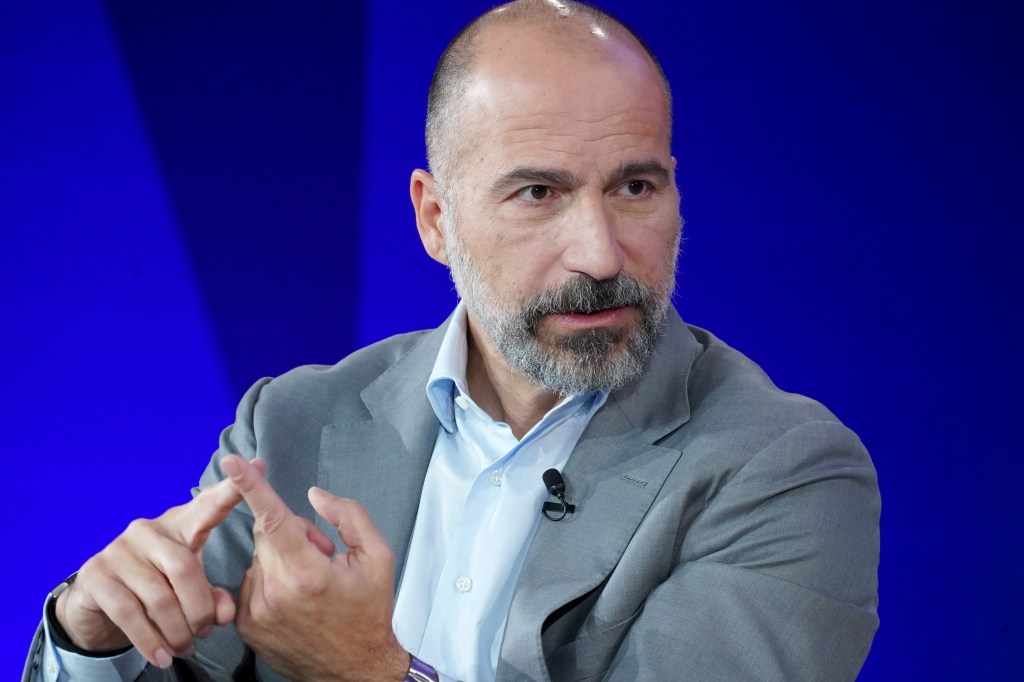
NEW YORK, NEW YORK - SEPTEMBER 23: Dara Khosrowshahi, CEO, Uber, speaks onstage during the 2025 Concordia Annual Summit at Sheraton New York Times Square on September 23, 2025 in New York City. (Photo by Leigh Vogel/Getty Images for Concordia Annual Summit)
=Dara Khosrowshahi, CEO, Uber. (Photo by Leigh Vogel/Getty Images for Concordia Annual Summit)

The Uber CEO said that hard work is “the most important skill in life” for young people to develop, whether they study engineering, medicine or literature. He calls hard work a “skill” because it requires staying focused on something, not being discouraged by failure and embracing a “grim determination.” Putting in hard work compounds over time, he noted. 

“For me, with my kids, I just want to teach them how to work hard,” Khosrowshahi said. “For me, growing up, as a banker, as an executive, I’m not going to let anyone outwork me. If that’s true, then they may be smarter, more talented, etc., but I’m not going to let anyone outwork me.”

The benefits of hard work

Though Khosrowshahi acknowledged that working at Uber is “incredibly hard,” he also noted that it comes with immense agency. Individuals can make a noticeable difference and impact the company, he said. 

Khosrowshahi also said that working in Uber’s demanding environment results in tremendous learning. Employees quickly learn on the job and adapt to a fast-paced style of work. 

Additionally, “while you will have worked hard, you’re going to have a great time,” Khosrowshahi said. “But don’t come here if you want to coast.”

The cost of hard work

Khosrowshahi added on the podcast that hard work could coexist with flexibility. If an employee wants to have dinner with their family, they can carve out that time, he said. He himself is “religious” about having dinner with his family every night from 6 p.m. to 8 p.m. when he is in town. 

However, Khosrowshahi said that there were “tradeoffs.” So if he is having dinner at 8 p.m., by 9:30 p.m., he is checking emails and performing work tasks. When he wakes up at 5:30 a.m., he is also checking emails. 

Other CEOs have more balanced approaches to work. Karri Saarinen, CEO of $1.25 billion work coordination startup Linear, told Entrepreneur last year that he has purposefully created a remote-first culture where employees can take breaks and work the standard 40 hours a week. 

“People are rushing too much and launching things that don’t quite work,” Saarinen said. “In our company, we always try to err on the side of quality, not quantity.”

Sign up for the Entrepreneur Daily newsletter to get the news and resources you need to know today to help you run your business better. Get it in your inbox.

from Entrepreneur – Latest https://www.entrepreneur.com/business-news/uber-ceo-says-this-is-the-most-important-skill-in-life-to-develop

Lamborghini Pulls the Plug On Its $500,000 Electric Supercar Because It’s Not Noisy Enough

Turns out wealthy people prefer their cars to be powerful and noisy. Lamborghini CEO Stephan Winkelmann just canceled the company’s all-electric Lanzador supercar after discovering that demand among his millionaire customers was “close to zero.” The Italian automaker is pivoting entirely to plug-in hybrids by 2030.

The decision came after more than a year of customer research, dealer feedback, and market analysis that revealed a harsh reality: wealthy buyers want the “emotional experience” of traditional engines. According to Winkelmann, EVs “struggle to deliver this specific emotional connection” that includes the distinctive sound and feedback of internal combustion engines.

Lamborghini isn’t alone in pulling back from pure electric vehicles. Stellantis recently scrapped some EV models, while General Motors disclosed a $6 billion hit from its electric program.

Read more

Sign up for the Entrepreneur Daily newsletter to get the news and resources you need to know today to help you run your business better. Get it in your inbox.

from Entrepreneur – Latest https://www.entrepreneur.com/business-news/lamborghini-pulls-the-plug-on-its-ev-because-its-not-noisy/502967

If Your Team Fears AI, Leadership Has Work to Do

Key Takeaways

  • AI adoption succeeds when leaders replace fear with curiosity, clarity and ethical guardrails.
  • Upskilling for AI is about human agency, not replacement, competitiveness or shortcuts.

The World Economic Forum’s Future of Jobs Report (2025) found that 77% of employers see the need to reskill and upskill their workforce through 2030 to collaborate effectively with AI. As I continue meeting with coaches and their clients — including CEOs of global brands, startups and entrepreneurs — this need rings true, as do two polarities in the AI arena: facing fear and finding agency.

Because AI is here to stay, businesses need to understand how people choose to engage with it (and why they don’t).

With that in mind, the following observations and insights can help entrepreneurs and teams move from fear to curiosity and evaluate their own risk tolerance for change.

Sign up for How Success Happens and learn from well-known business leaders and celebrities, uncovering the shifts, strategies and lessons that powered their rise. Get it in your inbox.

Facing fear in AI

Many fear AI, perhaps not knowing enough about it. As Stephen Covey said, “seek first to understand, then to be understood.” As an entrepreneur, it is necessary to understand your own and your team’s apprehension about AI, which often includes:

  • Job Security: One of the most common fears is job loss. But it’s important to focus on how effectively your team uses AI to stay competitive. Otherwise, it’s an employee or competitor whose focus on AI may replace you, not AI. Like with anything else, don’t let lack of education and information stifle growth.
  • Ethics: According to Deloitte AI Institute’s Agentic Enterprise 2028 study, confusion around AI is widespread: 54% of workers are concerned about the blurred lines between human and machine contributions. This statistic underscores the need for clear ethical guidance around AI, a recurring theme discussed at this year’s World Economic Forum. Ethics is one of the most important pillars that has established coaching as a respected and credible profession
  • Confusion: With so many AI tools and platforms, it is difficult to cut through the clutter, know what to trust, or simply, where to start. The uncertainty is often due to a lack of clarity around how these tools work. When vetting an AI tool or provider, understand where data is stored, what’s collected and how it is used. Upon agreeing with a provider, also understand what you are signing up for and ensure alignment with your standards. Ethical engagement with AI is not about avoidance. It is about awareness and informed choice. With information comes clarity.

If you have employees who fear AI but are sparked by curiosity, a first small step is experimentation. Use AI where it supports their work, learning or development. For rising professionals, early engagement with AI isn’t about shortcuts — it’s about building fluency and agency, enabling them to bring more creativity and energy to their work.

Finding agency in AI: Moving from fear to curiosity

According to the International Coaching Federation’s Director of AI, Susan Caesar, “people want to feel empowered. They want to have agency in the way that they live and the way that they work. And all of these tools enable you to be liberated as a person and… affect impact.”

Within the coaching industry, research tells us that digital natives — mainly Gen Z and Alphas — would rather use their devices to support an AI-supported learning journey. The same can be said for your employees, or perhaps even you. Using devices can spark curiosity about transformational, human-centered growth. Rather than insisting on traditional approaches (in coaching’s case, human approaches), offer a small taste through AI-supported tools — helping people experience AI’s potential without intimidation. This approach meets people where they are and eases them into growth.

According to Ms. Caesar, “[AI] is more than a tech shift. It is inviting us to think about what it means to be human and what those values are…that really are necessary and crucial…things like presence, curiosity, the questions that we ask, being in the moment and our lived experience.”

At ICF, we continue to feed our curiosity about AI’s impact on the organization’s next 30 years, and beyond, by asking:

  • How can AI help coaches run their businesses in a more effective way
  • How can AI help clients sort through information and
  • What are scalable coaching opportunities

As you ask yourself how AI will shape the way you and your team will work, learn and grow, consider AI as a tool to expand access, increase agency and introduce teams to new growth opportunities.

Sign up for the Money Makers newsletter to get weekly, expert-backed tips to help you earn more money — from real people who founded and scaled successful businesses. Get it in your inbox.

At ICF, we are putting the following into practice for our members, and you can apply the same principles to help teams move past fear and stay a step ahead in their businesses.

  • Create an online AI community where resources are centralized for easy access
  • Develop a toolkit of information that will bridge education gaps
  • Become a part of the solution: Work with AI vendors to experiment, to vet and to validate their solutions

In addition to ensuring resources are accessible and experimentation is encouraged, engage your team directly. Through employee surveys or one-on-one discussions, ask your employees about their needs and expectations for implementing AI.

Ultimately, their input fuels curiosity and shapes effective adoption. And that’s how AI becomes a tool for agency, not fear. It is not to replace us, it’s to support us. And leadership will always remain human-driven.

from Entrepreneur – Latest https://www.entrepreneur.com/leadership/how-to-turn-ai-fear-into-momentum-across-your-team/502566

How Hustle Culture Quietly Erodes Your Long-term Leadership Potential — and the Strategy You Need Instead

Key Takeaways

  • Longevity extends beyond market opportunity, acting as a multiplier for cognitive clarity, emotional resilience and strategic leadership.
  • Entrepreneurs are embracing longevity with science-based approaches, integrating these principles into product development and business strategy.
  • A shift from longevity as a concept to a practical, evidence-based framework is essential for leaders seeking a competitive, strategic advantage.

When my last article on longevity and the market opportunity behind healthspan was published, I expected a few thoughtful comments. What I didn’t expect was the breadth and intensity of the reaction.

Messages poured in from readers across industries, from founders sharing their own health challenges to investors asking for introductions to scientists and labs. Longevity companies reached out. Executives at some of the most respected biotech and wellness organizations wanted to explore collaboration. And, intriguingly, several industry leaders even asked about Rejna Skin‘s science-led formulations.

That response wasn’t just gratifying; it revealed something deeper. People aren’t just curious about longevity — they’re hungry for pragmatic, science-based, applicable ways to integrate it into daily life and business strategy.

Sign up for the Entrepreneur Daily newsletter to get the news and resources you need to know today to help you run your business better. Get it in your inbox.

The shift beyond buzzwords: Longevity as a strategic imperative

When we talk about the longevity economy, popular narratives often focus on financial figures and demographic trends: that the global longevity market could exceed tens of trillions of dollars, or that aging populations will soon dominate consumption patterns. Those forecasts are real, but they’re background noise compared to what’s happening at the intersection of biological science, personal performance and leadership outcomes.

Here’s the insight most coverage still misses: Longevity isn’t just a market; it’s a performance multiplier.

In other words, longevity systems don’t just extend life; they extend the years of cognitive clarity, emotional resilience and strategic capacity required to lead, innovate and create impact.

Why science matters, and why entrepreneurs should pay attention

The longevity landscape today is powered by real, measurable advances in biology, not wishful thinking. Research into cellular aging pathways, metabolic regulation and systematic markers of ageing is producing data that clearly correlates with improved physical resilience and improved cognitive function. From senolytic compounds to biomarker-based lifestyle protocols, the science is increasingly about function, not fantasy.

This matters for founders because your body is your longest-running asset. Sharper focus, accelerated recovery, emotional balance and metabolic resilience aren’t just “wellness perks.” They’re business performance advantages.

That’s the mental shift every founder should make: Don’t think of longevity as future safety, think of it as present-day optimisation.

One pattern that emerged from the responses to my last article was how often readers asked what longevity looks like when applied to real products and decisions, not just theory. That question reflects a broader shift across industries towards health solutions. In my own work developing Rejna Skin, for example, the focus has always been on collaborating with expert dermatologists and scientific experts to ensure formulations are grounded in biology rather than trends. Approaching product development this way mirrors how serious founders increasingly think about longevity itself: not as marketing language, but as a discipline rooted in measurable outcomes and long-term credibility.

From longevity markets to longevity mindsets

The next big shift in this space won’t be about who has the fanciest lab or biggest funding round. It will be about who adopts a longevity mindset at the core of their decision-making.

That means:

  • Entrepreneurs applying biological metrics to performance optimization.
  • Team building products that integrate systematic health principles rather than just superficial facades.
  • Leaders recognizing healthspan as a competitive edge, not just a lifestyle choice.

In other words, the opportunity isn’t just financial. It’s strategic.

A practical framework for action

If longevity has only translated into generic advice like “invest in wearables” or “eat better,” you’re missing its strategic value and it’s time to upgrade your approach. Leaders who treat longevity seriously tend to apply it through structured, evidence-based systems. Four starting points:

  1. Measurement before modification. Start with validated indicators of ageing and performance, sleep quality, recovery, metabolic markers and cognitive stamina, rather than vanity metrics. If you’re guessing, you’re not optimising.
  2. Choose science-grounded interventions. Evaluate protocols with clinicians, researchers or evidence-based platforms when evaluating protocols, not internet consensus. The longevity space is moving fast, and the gap between credible science and marketing is widening.
  3. Prioritise biological relevance over trends. Use interventions supported by peer-reviewed outcomes and plausible mechanisms, not hype-driven claims. If it can’t be explained, measured, or repeated, treat it as noise.
  4. Cross-disciplinary synthesis and integrating building recovery into your operating model. High-performing leaders don’t eliminate stress; they build systems that help them recover quickly and consistently. Combine biology with psychology, date and leadership habits to create an approach that holds up under pressure. Recovery isn’t downtime, it’s maintenance for sustained output.

When leaders execute with this framework, longevity becomes more than a trend; it becomes a distinctive advantage in a marketplace where tired founders look for shortcuts and savvy ones invest in durable performance.

The narrative is changing, and so should yours

From the flood of responses to my article, one thing was clear: People don’t just want to know about the longevity revolution; they want to be part of it.

I am applying these same principles in my own work as we prepare to launch Rejna Skin, built with a science-first mindset and in collaboration with experts, and I’m looking forward to sharing what this becomes.

The next phase of this conversation won’t be driven by social media hype or surface-level wellness cues. It will be shaped by leaders who understand that the body, like a business, can be optimised, strengthened and refined over time.

That’s not futuristic thinking. That’s present-day strategic advantage. Let’s move forward with that reality in mind.

Sign up for our weekly Franchise newsletter to get the latest franchise news, advice and opportunities. Get it in your inbox.

from Entrepreneur – Latest https://www.entrepreneur.com/leadership/smart-leaders-are-ditching-hustle-culture-for-this-new/500782

I Built a Business In My Garage, Got Rejected On Shark Tank — Then Sold It to Amazon for $1 Billion

Key Takeaways

  • Siminoff’s Doorbot prototype paved the way for Ring’s official launch in 2014.
  • Despite a rejection on Shark Tank, Ring was acquired by Amazon for about $1 billion.
  • Now, Siminoff continues to work closely on the product, with a focus on AI.

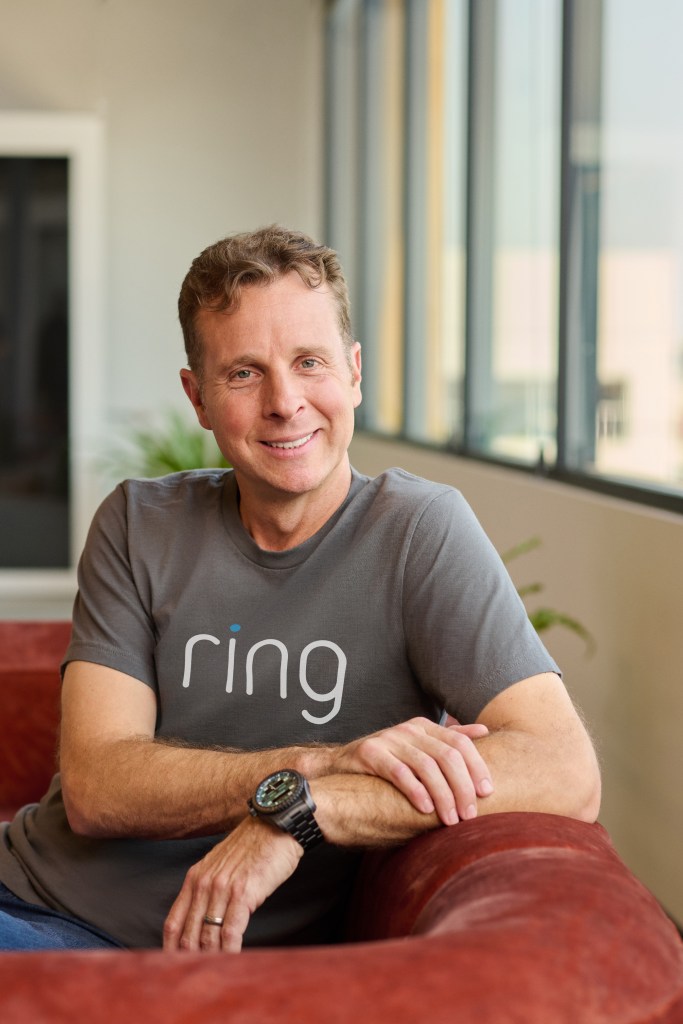
This as-told-to story is based on a conversation with Jamie Siminoff, founder of Ring and author of Ding Dong, which explores how he turned his garage-built prototype into a video doorbell that led to a $1 billion acquisition by Amazon.

Image Credit: Ring. Jamie Siminoff.

I’ve always been an inventor. As a kid, I would tinker all the time. That ultimately led to working on a bunch of small tech startups as an adult, but nothing huge. I sort of had an entrepreneurial midlife crisis and told my wife I was just going into the garage to work on things. When I was in the garage, I couldn’t hear the doorbell. It was 2011, and I’d just gotten an iPhone, so I figured there must be a doorbell on the market that could connect to my iPhone with Wifi. But nothing existed. 

Since I was already in the garage working on various projects, I decided to build one. I took a camera, hacked some stuff up and developed a contraption I called the Doorbot. I put it on my front door. My wife said it made her feel safer at home, which was really the aha moment. It wasn’t just about building the doorbell. It was about understanding that by being connected to the world through our phones, we could approach home security in a totally different way. That changed everything. We set out with the mission to make neighborhoods safer. 

The Kickstarter pre-sale and ‘Shark Tank’ appearance

A couple of years later, we ended up doing a pre-sale on Kickstarter, which gained traction, and took the product on Shark Tank in November 2013. I consider Shark Tank the Olympics for entrepreneurs and inventors. It’s a huge opportunity for credibility and awareness. So I trained as if I were an athlete preparing for the Olympics. I built the set in my backyard and had neighbors come over and ask me questions.

 Producers had told me to get ready for the Sharks to talk over each other. It’s a lot to manage — and it can’t be boring if the episode’s going to make it on air. You could have the best business in the world, but if it’s twelve minutes of droning on TV, that’s terrible. I watched literally every Shark Tank episode and tagged the ones I wanted to emulate, then watched those again, on repeat. 

When I was in front of the Sharks, it was almost like a blackout. They made us do a live demo, and my stress level couldn’t have been any higher because the product was barely working at the time. We weren’t even in mass production yet. After it worked, I figured it was a done deal. I think all entrepreneurs do this: we have this reality distortion, where we sort of have to lie to ourselves in order to survive. I was 100% convinced that Mark Cuban was going to invest. But he backed out within minutes. 

Image Credit: Ring

Doorbot’s rebrand to Ring and skyrocketing sales

For a few days, I was worried the episode wouldn’t even air because we didn’t get a deal. But it did. We realized quickly from the response to Shark Tank that people understood this wasn’t just a new gadget, but a really valuable product for their security. I knew that if other people understood it, that meant the competition would understand it, too. And, at that point, we were still like the Rugrats in a garage trying to make this work. It was 2013, heading into the holidays, and I knew we needed to go all in and have the product we really wanted by the next holiday season if we were going to succeed. 

The rebrand to Ring, which featured improved video quality, motion detection and cloud recording and would later sell to Amazon for $1 billion, officially launched October 2014. 

And we were right. By the time CES (the world’s largest annual technology trade show) rolled around in 2015, there were roughly 30 doorbell products. It was insane. But because we’d launched in October 2014, we already had a lot of momentum. We did $30 million in 2015, $170 million in 2016 and $480 million in 2017. Then, we raised money in the summer of 2015, which was the summer Richard Branson invested, and over the 60 days we were talking with him, our sales went from $1 million a month to $2 million a month.

Amazon, Jeff Bezos recognized Ring’s infinite possibilties

When things are growing so fast and everything’s breaking, you’re just trying to keep the car wheels from shooting off. You’re not actually looking at the speedometer. Ultimately, that rapid growth and momentum led to the Amazon sale in early 2018. Amazon was a good fit because we felt that Jeff Bezos at the time and the team there, based on their track record, would still back our mission. All the articles that came out at the time said that Amazon was buying Ring to help protect their packages, but that wasn’t it — Jeff and the team realized it was an infinite problem to work on. 

And, again, while such quick growth sounds great from the outside, it was a disaster on the inside. You can’t control anything. Your balance sheet is getting destroyed because you’re ordering $500 million worth of product to do maybe $10 million a month in sales. But you have to order four times the volume because it needs to be placed 12 to 18 months ahead. Then, if sales slow down, you go out of business because you have too much inventory.  But without inventory, sales can’t go up. So it’s this weird Catch-22. With Amazon, even if we ordered $200 million worth of extra inventory, Amazon can survive that. 

Image Credit: Ring

Grappling with founder mode burnout and taking a step back

After the sale in 2018, I joined Amazon to keep working on the product. When you sell, people assume you’re heading to the beach on vacation. But that wasn’t the case at all. We were still seeing triple-digit growth percentage-wise, so I was still in complete founder mode. I was part of a new company; I was working harder than ever before in a lot of ways. Going into 2023, we were finally profitable, and I felt proud of what we’d built and like we’d delivered real value. But I was super burnt out. I’d gone from my garage to this and was mentally toast — I needed to take a step back. 

Then, of course, AI enters the picture. I saw what AI could do, and I was sad I didn’t have the chance to do it. I had such a deep understanding of Ring and was like, Wow, I can’t believe I don’t get to put these two things together. Fortunately, some things work out: I was able to come back. Not only are we working on outward-facing features with AI, but internally, the technology has reduced the time it takes to develop products from years to months.

Ring’s Super Bowl commercial, Search Party feature

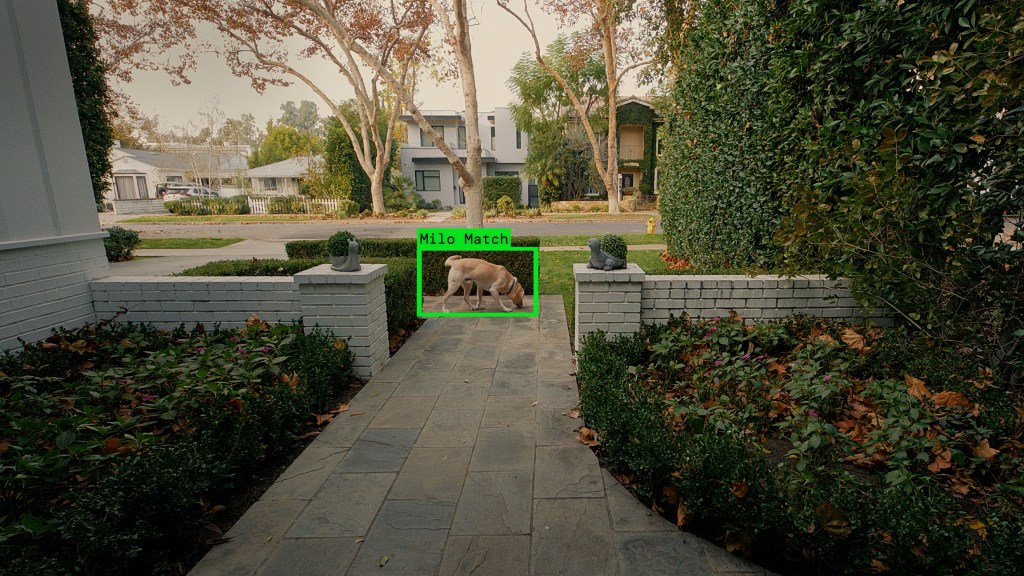
Our Super Bowl commercial highlighted our Search Party feature, which is an AI-powered feature for outdoor cameras that scans recent video footage to help locate missing pets (currently dogs, with cats planned). The feature can be enabled and disabled in the Ring app. Search Party, which launched in September, received a lot of positive customer feedback. But when you do anything big, there’s always potential for a strong response. Some people expressed privacy and security concerns. There’s a lot of AI anxiety — it’s growing at the speed of AI itself. 

But with Search Party, you’re still in control of your videos. We’re not an AI assistant that’s saying, ‘This dog that’s in front of your house looks like this dog that’s missing in your neighborhood. Do you want to call your neighbor?’ This feature is no different than physically being at your house and seeing the collar and calling the number, or deciding not to — if you decide not to, no one knows. It makes me sad that the privacy and security aspects have been misconstrued because we actually did build something that’s private and secure and keeps people in control. 

Image Credit: Ring

Business leadership lessons and what’s next for Ring

Over my years as a business leader, I’ve learned that leadership is pretty simple. The best leaders are people who are willing to do their job and anything else that needs to be done.  My email address is on every box. That sets the tone that no one is better than the customer. As crazy as it sounds, as companies get bigger, it’s easy to lose sight of the human side of the business. If a customer service agent does something wrong — which does happen at our scale — they’re probably going to get an email from me. 

Ring stands for the area around your home and neighborhood, and when I think about the company’s future, that’s where we’re going to focus. For us, it’s about how we can prioritize what you’re buying Ring for, and ensuring that you’re only interacting with it when you want to. For example, you might set a specific alert to notify you when your child gets home. So  I like the idea that Ring becomes this very customized experience — almost like a person that you’ve trained to tell you exactly what you want to know. 

from Entrepreneur – Latest https://www.entrepreneur.com/business-news/business-rejected-on-shark-tank-then-sold-to-amazon-for-1-billion-ring

Why This 30-Year-Old Vanderbilt Valedictorian Left Her Big Law Job to Start an AI Company

Key Takeaways

  • Logan Brown, 30, is the founder and CEO of Soxton, an AI-powered law firm.
  • Brown got the idea for Soxton after working with startups at Cooley, a Big Law firm.
  • Soxton uses AI first to generate documents, then allows human lawyers to review them, for a flat fee.

Long before she ever set foot at Harvard Law, Logan Brown was a child in suburban Kansas, captivated by the courtroom dramas flickering on her family’s television. Brown was transfixed by Law & Order: SVU reruns and Elle Woods’s improbable rise in Legally Blonde. Somewhere between the cross-examinations and the pink-suited triumphs, a switch flipped: Brown decided she was going to be a lawyer.

The next step came with the kind of reckless confidence only a middle schooler could muster. She typed up a resume and cover letter and marched straight into the local district attorney’s office to ask for a job. She was twelve years old.

Most adults would’ve smiled and sent her home, but a secretary named Dolores saw something earnest in her. Dolores made Brown her unofficial intern, letting her file paperwork, run coffee and linger in courtrooms. That summer, and many more to follow, Brown trailed lawyers, judges and staff through the courthouse corridors, learning how the law actually worked. To Brown, the experience felt like a glimpse inside the career she was meant to build.

“I really just fell in love with the law,” Brown tells Entrepreneur in a new interview. “I knew I wanted to be a lawyer.”

Starting Spencer Jane

By the time Brown arrived at Vanderbilt University for undergraduate study, she had the kind of purpose most undergrads were still searching for. 

She started chasing experiences that pushed her deeper into law. As an intern at Condé Nast’s legal department, she sat in glass-walled conference rooms learning from the lawyers on staff. In Nashville, she spent long days at the public defender’s office. When she studied abroad, she found her way into law firms overseas. 

“Every internship I ever had during that time period had a legal intersection,” she says. “I really just liked the law — and any time I could weave it into my coursework, I did.”

After graduating valedictorian of her class at Vanderbilt with a Bachelor’s in Human and Organizational Development in 2018, Brown attended Harvard Law School. There, a new idea began to tug at her attention — entrepreneurship. It arrived, fittingly, through frustration rather than inspiration. On the hunt for a professional outfit that made her feel both confident and comfortable, Brown found the options impossibly dated or ill-fitting. So she did something only an aspiring founder would do: she decided to design her own line.

The result was Spencer Jane, a workwear startup born in her law school apartment, brought to life in 2020 through an Italian manufacturer. But her first big mistake was a rookie one: she mixed up American and European sizing charts. The early prototypes didn’t fit anyone. “It was a disaster,” she admits. Yet that sizing mishap marked an inflection point. It was her first true lesson in building something from scratch.

Seeing the gaps in Big Law

When Brown graduated from Harvard Law in 2022, her path seemed preordained. She landed the kind of job that law students whisper about — a coveted associate role at Cooley, the Silicon Valley powerhouse law firm known for shepherding startups into unicorns. The offer was validation, the reward for years of experience.

At Cooley, Brown was a spectator to the rapid progress of AI inside and outside the legal industry. She saw the amount of excitement AI generated internally and externally with clients. “I wanted to be a part of that,” she says. 

Logan Brown. Credit: Soxton

Brown represented more than 50 founders and advised funds deploying capital to startups, giving her an understanding of how early-stage companies interacted with the legal system. Her role involved helping founders incorporate, raise investment and hire employees. 

“I would see a common pain point where companies had just been foregoing legal until they had enough money to afford it,” Brown says. “I saw that that was tricky because there were a lot of mistakes that you could make that could have been easily prevented and ended up costing a lot more money to correct later on.”

In a world where founders can prototype products in days and iterate constantly, legal work is slower and more costly. That causes many first-time founders to find templates for legal documents on Google, experiment with tools like ChatGPT or avoid legal help altogether until a financing event forces them to confront it.

Walking away from Big Law

In May of 2025, Brown did the unthinkable. At the age of 30, after three years at Cooley, she handed in her resignation and stepped into startup uncertainty. 

Brown’s venture is Soxton, an AI-powered legal startup designed for founders at their most uncertain moment: the beginning. Instead of hourly billing and endless paperwork, Soxton delivers legal guidance in a fast, automated, and radically affordable way.

“I just went for it,” Brown says.

Soxton is still in stealth mode; its website only features a waitlist. However, Brown says that over 300 startups are already using the service. Growth has been driven almost entirely by referrals: founders can only gain access to Soxton by being referred by existing customers. 

The process of working with Soxton is simple: founders meet with Brown and the team to discuss their needs, and then can request documents or workflows. AI takes the first pass at creating a document, which is then reviewed by a human lawyer. Soxton charges $100 for a custom contract reviewed by a human attorney.

Soxton is a step up from asking ChatGPT for legal help because it adds the option of human lawyers refining and returning a contract within a few hours. “I think that AI is not in a place yet to be the only source of legal advice,” Brown says. “Right now, we have lawyers review everything that is AI-generated before it goes back to a client.”

Prediction for the future

Since launching in May, Brown has raised $2.5 million from investors and grown Soxton to a core team of four full-time employees and more than 20 contractors. Her workdays now routinely stretch past 12 hours, with most weeks crossing the 100-hour mark — more hours than she worked at Cooley. But she says it doesn’t feel like a sacrifice. “I wish for everyone to care about their job the way I care about Soxton,” she says. 

Over the next decade, Brown predicts that the legal system is going to change “significantly.”

“I think that more people are going to have access to legal services at an easier and earlier point in time in a company’s life cycle,” she says. “I’m super excited that Soxton gets to help pave that way.”

Sign up for How Success Happens and learn from well-known business leaders and celebrities, uncovering the shifts, strategies and lessons that powered their rise. Get it in your inbox.

from Entrepreneur – Latest https://www.entrepreneur.com/entrepreneurs/she-left-big-law-to-start-an-ai-company

Design a site like this with WordPress.com
Get started